
Where Biology Meets Chemistry: Inside euglena’s R&D Briefing
Expanding the potential of microalgae through the fusion of agricultural science and chemistry
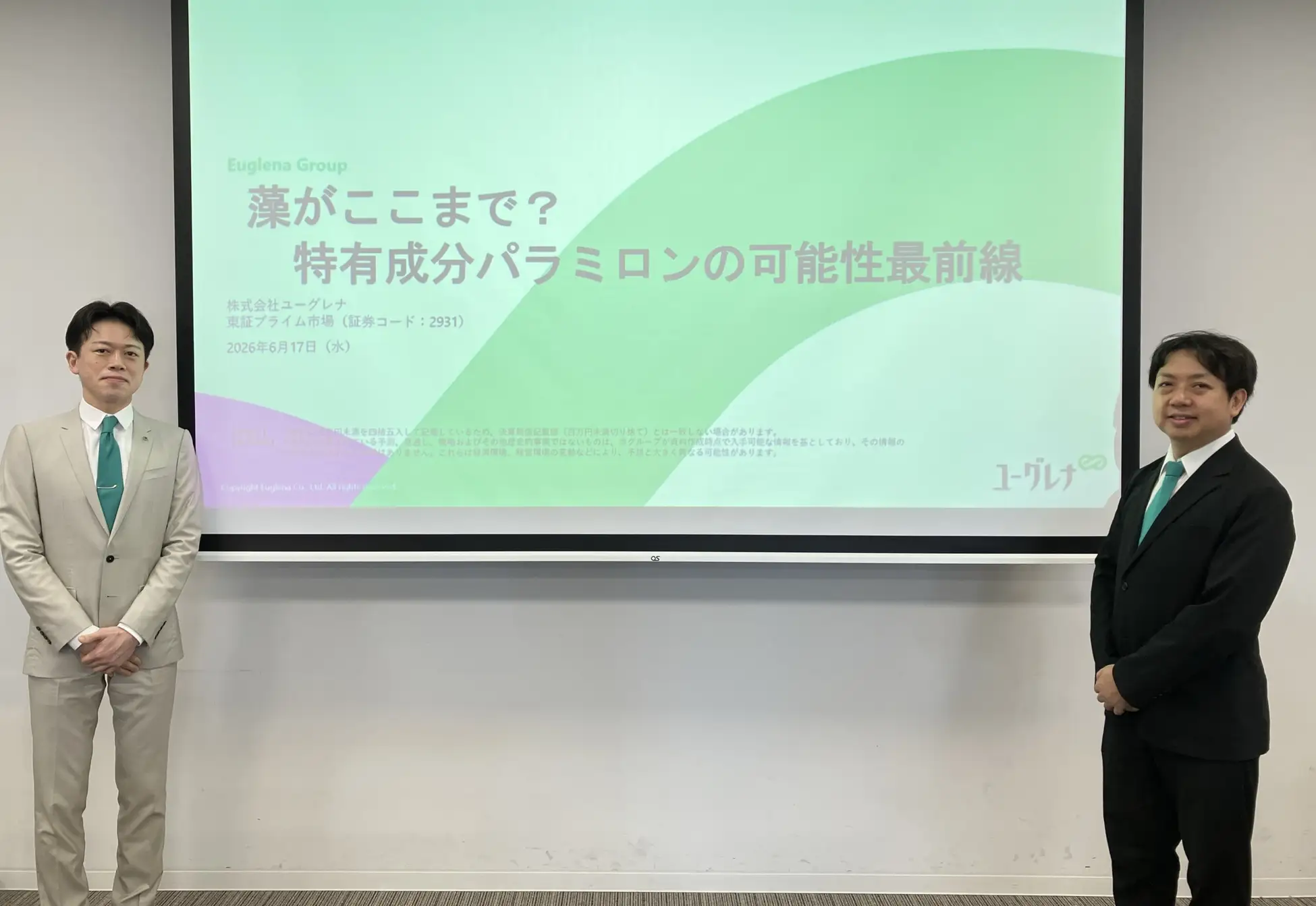
On June 17, 2026, euglena Co., Ltd. hosted a briefing session for members of the media to introduce the company's research and development activities. The session covered three themes: the evolution of euglena's research organization, progress in paramylon research, and the company's first steps into disease-focused research.
A new phase for R&D from 2026
Two speakers took the stage. Kengo Suzuki (PhD in Agriculture, PhD in Medical Science), a co-founder of the company and widely known in Japan as "Dr. Midorimushi," has led euglena's research since its earliest days. He was joined by Taku Ogura, who joined euglena in 2026 as Executive Officer, Research and Development, and now heads the R&D organization.
To date, euglena's R&D has been built around a biological approach — the science of cultivating Euglena gracilis at scale. The next phase adds a second axis: chemistry. By layering chemical expertise onto that biological foundation, the company aims to create value across a considerably wider range of applications.
Both speakers emphasized keeping research and business tightly connected, and expanding external partnerships in order to accelerate the translation of research results into products and services in the real world.
Paramylon as a starting point
Paramylon — the β-1,3-glucan storage polysaccharide unique to Euglena — remains the core of the company's research portfolio.
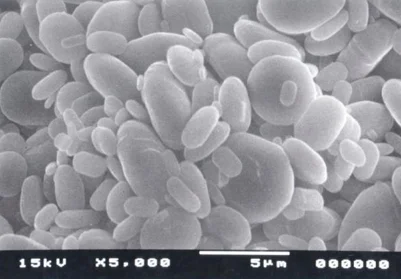
Alongside the accumulated body of work behind existing applications in food and cosmetics, the briefing introduced further application possibilities now under investigation.
The most notable of these is chronic kidney disease (CKD). Suzuki framed CKD as a major and growing social challenge, and outlined where Euglena may have a role to play. The work is at a research stage today, and the company intends to advance verification in collaboration with corporate partners and medical institutions. It represents a deliberate step beyond euglena's traditional food and healthcare territory.
"Multi-stage utilization": using one material completely
Ogura then presented what he described as a defining characteristic of euglena's R&D — the concept of the "New Euglena 5F," or using a single raw material across multiple stages of value.
Euglena is not limited to food and supplements. The same biomass can be directed toward cosmetic ingredients, fertilizer, and biofuel. Extracting several distinct forms of value from one feedstock allows resource efficiency and business expansion to advance together rather than in tension.
The presentation also walked through the underlying biology: how Euglena cells synthesize paramylon and wax esters, and how those pathways set the boundaries of what the biomass can become.
Biology × chemistry: the new axis
Ogura closed with the keyword he sees defining euglena's next chapter — the fusion of biology and chemistry.
Drawing on his own specialty in interface (surface) chemistry, he explained how that discipline could improve the absorption of nutrients, stabilize product quality, and refine taste and aroma — each of which translates directly into product value.
Layering chemical knowledge onto a research base that has been biological for two decades makes expansion into food, cosmetics, and fuel more realistic in parallel, and opens the door to value creation that is not simply an extension of what came before.
Building on more than twenty years of research, euglena will continue to pursue solutions to societal challenges under this new R&D structure.